
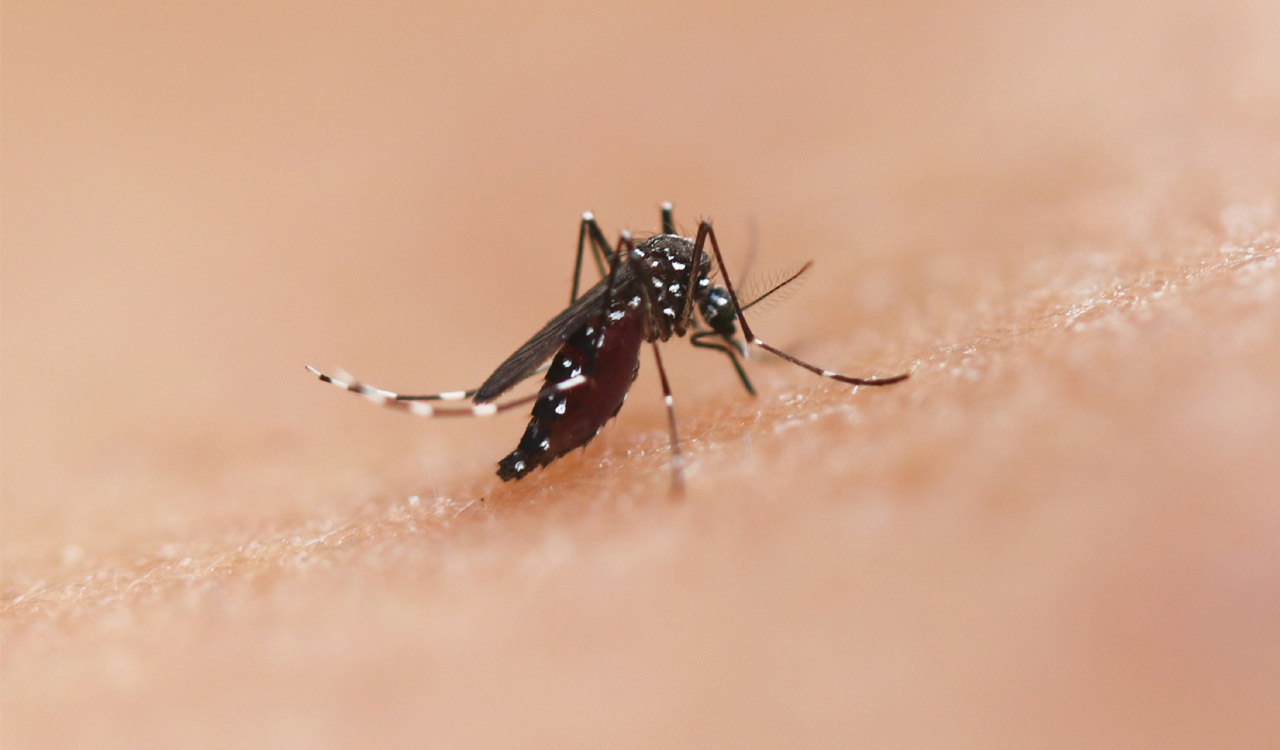
Health authorities in Hyderabad have intensified dengue surveillance after warning that the disease is no longer confined to the monsoon season. Officials say changing rainfall patterns, urban living conditions, and shifts in mosquito behaviour are reducing the effectiveness of traditional vector-control measures, making dengue a year-round public health concern.
Unlike earlier years, intermittent rainfall followed by dry spells is creating ideal breeding conditions for Aedes aegypti mosquitoes. Continuous heavy rain typically washes away larvae, but scattered showers leave behind clean, stagnant water in residential and commercial areas, allowing mosquitoes to breed more efficiently.
One of the biggest concerns for health officials
is the high number of asymptomatic dengue infections. Experts estimate that nearly 80% of infected individuals may show mild or no symptoms, yet they can still carry the virus in their bloodstream. When mosquitoes bite these individuals, the virus continues circulating silently within communities, making outbreaks harder to detect and control.
Authorities also note that mosquito breeding sites have shifted from open drains and muddy puddles to indoor and household locations. Refrigerators’ drip trays, air-cooler reservoirs, air-conditioner condensate pipes, flower pots, water storage containers, and construction sites are increasingly being identified as major breeding hotspots because they collect clean standing water.
Another significant challenge is the mosquito’s daytime biting pattern. Since Aedes aegypti is most active during daylight hours, people remain vulnerable at schools, offices, public transport hubs, and workplaces, reducing the effectiveness of measures that focus only on nighttime mosquito protection.
Medical experts
also warn that dengue has four distinct virus serotypes. Recovering from one strain does not provide complete immunity against the others. Repeated infections with different strains may increase the risk of severe complications such as Dengue Hemorrhagic Fever (DHF) and Dengue Shock Syndrome (DSS), both of which can cause internal bleeding, plasma leakage, and organ failure if not treated promptly.
To strengthen preparedness, Telangana’s disease surveillance teams have stepped up inspections, source reduction drives, public awareness campaigns, and monitoring of mosquito breeding sites across Hyderabad. Residents have been advised to eliminate stagnant water around homes, use mosquito repellents during the day, wear full-sleeved clothing, and seek immediate medical attention if they develop high fever, severe headache, body pain, nausea, or skin rashes

Actress with back-to-back Telugu flops may leave Hyderabad