
After investing more than ₹3.3 lakh crore in digital and telecommunications infrastructure over the past decade, Bharti Airtel is preparing for its next phase of expansion by focusing on three major business areas: financial services, cloud computing and data centres.
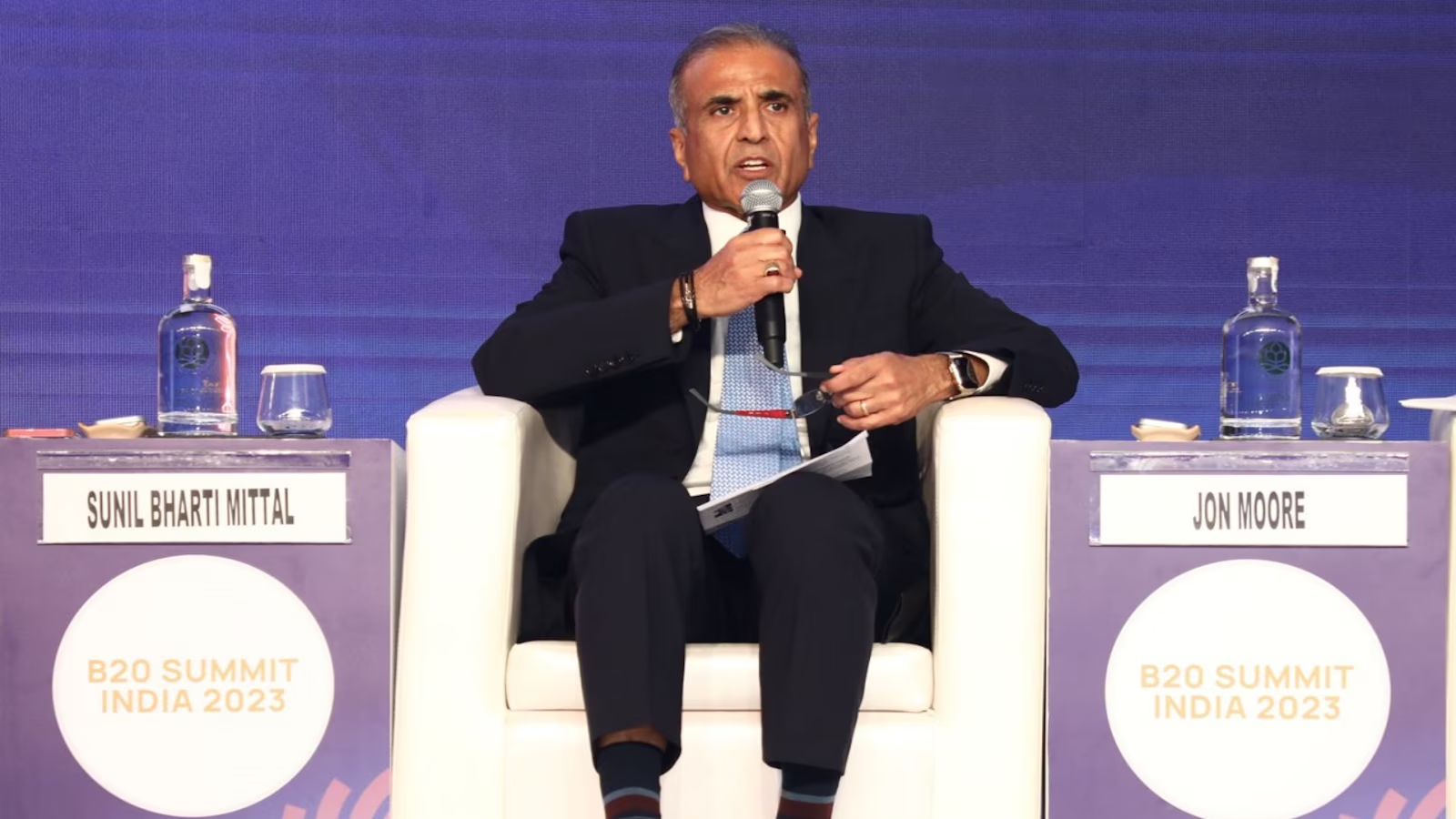
Bharti Airtel Chairman Sunil Bharti Mittal outlined the company’s future strategy in his message to shareholders in the company’s annual report for the financial year ended March 2026. He said Airtel’s long-term investments in connectivity had created a strong foundation for developing new businesses beyond traditional mobile and broadband services.
The telecom company believes its large customer base, nationwide network, digital platforms and extensive data capabilities can support growth in these emerging sectors.
₹3.3 Lakh Crore Invested in Digital Infrastructure
Over the last ten years, Airtel has invested more than ₹3.3 lakh crore in strengthening its digital infrastructure.
The investment has supported the expansion of mobile networks, 4G and 5G services, fibre connectivity, broadband infrastructure, enterprise solutions and other digital platforms.
According to Mittal, these investments have helped Airtel build a resilient and secure digital ecosystem. The company now plans to use this infrastructure as the base for its expansion into financial services, cloud technology and large-scale data centres.
Rather than remaining primarily a telecom operator, Airtel aims to increase its presence in businesses that are expected to benefit from India’s rapid digital transformation.
Financial Services Become a Major Growth Priority
Financial services are expected to play an important role in Airtel’s future plans.
The company is developing a large-scale non-banking financial company, commonly known as an NBFC. The platform is expected to use Airtel’s digital reach, customer network and technology capabilities to provide financial products and services across India.
Airtel has announced plans to invest ₹20,000 crore in the NBFC over the coming years. Airtel is expected to contribute 70% of the investment, while Bharti Enterprises will provide the remaining 30%.
The company plans to use its digital ecosystem and data-analysis capabilities to expand access to simple and secure financial services.
Airtel believes its relationship with millions of customers could help it build a large financial-services platform. However, the company will need to operate within regulatory requirements and develop strong systems for responsible lending, customer protection and data privacy.
Airtel’s NBFC Plans
An NBFC provides financial services similar to those offered by banks but operates under a different regulatory structure.
Depending on regulatory approvals and the company’s final business model, Airtel’s financial-services platform could offer products such as personal loans, consumer credit and other digital financial solutions.
The company expects technology and data analytics to support customer assessment and improve access to financial products.
Airtel has stated that its digital ecosystem includes a large data and analytics operation supported by more than 500 data scientists. The company plans to use these capabilities to develop innovative financial services while managing risk.
Airtel Cloud Targets Indian Businesses
Cloud computing is another major area in Airtel’s growth strategy.
Airtel Cloud is designed to provide cloud infrastructure and digital services hosted within India. The company aims to meet increasing demand from businesses and government organisations seeking secure, reliable and locally hosted cloud solutions.
The platform is positioned as a sovereign, telecom-grade cloud service. This means that customer information and digital workloads can be stored and managed within India while being supported by Airtel’s telecommunications infrastructure.
During FY26, Airtel secured more than 24 sovereign-cloud deals as it expanded its enterprise technology portfolio.
The company believes that demand for cloud services will continue growing as businesses adopt artificial intelligence, digital applications, automation and data-based technologies.
Focus on Sovereign Cloud Services
Data security and localisation have become important priorities for businesses and public-sector organisations.
A sovereign-cloud platform is designed to store and process data within a country while following local regulations. Airtel believes its network infrastructure and presence in India could help it meet this growing requirement.
The company aims to provide cost-effective cloud services while giving customers access to secure infrastructure hosted within the country.
Airtel is also strengthening its enterprise portfolio in areas such as cybersecurity, communication-platform services and the Internet of Things.
These services could help Airtel expand beyond connectivity and become a broader technology partner for Indian businesses
.

Actress with back-to-back Telugu flops may leave Hyderabad