
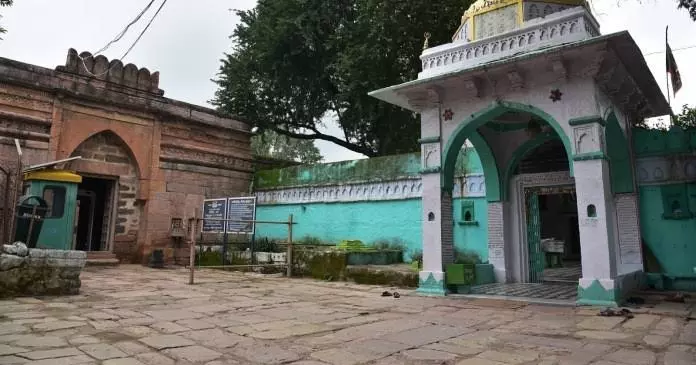
The Supreme Court has indicated that it is prepared to hear the long-running Bhojshala–Kamal Maula dispute in detail and has urged all parties to remain patient while the legal process continues. The court stressed that the sensitive matter requires a fair and careful examination because it involves competing religious claims, historical evidence, archaeological findings, and important legal questions.
The dispute concerns the Bhojshala–Kamal Maula complex located in Dhar district of Madhya Pradesh. Hindu groups consider the historic structure to be an ancient temple and centre of learning dedicated to Goddess Vagdevi, also known as Goddess Saraswati. Muslim groups identify the site as the Kamal Maula Mosque and maintain that members of the community have historically offered prayers there.
Because both communities attach considerable religious and historical importance to the monument, the case has remained a sensitive legal and social issue for many years.
Supreme Court Assures Parties of a Proper Hearing
During the proceedings, the Supreme Court made it clear that it was willing to provide sufficient time for a detailed hearing. The court reportedly indicated that the matter could be heard regularly, or even on a day-to-day basis if required, to ensure that the dispute is addressed properly.
At the same time, the court urged the parties to exercise patience and avoid creating unnecessary urgency or tension outside the judicial process.
The judges emphasised that all sides would receive an opportunity to present their arguments. The court’s observations indicated that no conclusion should be assumed before the legal issues, historical records, archaeological evidence, and objections raised by the parties are fully examined.
The assurance was significant because the dispute involves strongly held beliefs from both communities. A detailed judicial hearing is expected to provide each party with an opportunity to explain its position and respond to the evidence presented by the opposing side.
What Is the Bhojshala Dispute?
Bhojshala is an Archaeological Survey of India-protected monument situated in Dhar, Madhya Pradesh.
According to Hindu groups, the structure was established during the rule of King Bhoj in the 11th century and served as a centre for education, literature, philosophy, and Sanskrit learning. They believe the complex was dedicated to Goddess Vagdevi, the deity associated with knowledge, education, music, and wisdom.
Hindu organisations have sought greater worship rights at the site and have argued that the complex should be officially recognised as a temple dedicated to Goddess Saraswati.
Muslim groups, however, identify the structure as the Kamal Maula Mosque. They maintain that the site has a long history of Islamic worship and that members of the Muslim community have traditionally offered Friday prayers at the complex.
The competing claims regarding the site’s religious identity, history, and worship rights form the central part of the legal dispute.
Existing Worship Arrangement
The Archaeological Survey of India introduced an arrangement in 2003 to regulate religious activities at the monument.
Under this arrangement:
Hindu devotees are permitted to perform prayers and religious activities at the complex on Tuesdays.
Members of the Muslim community are allowed to offer Friday namaz at the site.
The arrangement was created to allow both communities access to the monument while maintaining public order and protecting the historic structure.
However, questions regarding the permanent religious identity of the complex and the extent of worship rights available to each community have continued to remain unresolved.
The Supreme Court has indicated that existing arrangements are temporary and will remain subject to the final outcome of the legal proceedings.
Archaeological Survey Becomes a Major Part of the Case
The dispute gained renewed attention after the Madhya Pradesh High Court directed the Archaeological Survey of India to conduct a detailed scientific examination of the Bhojshala complex.
The purpose of the survey was to study the monument’s historical background and architectural features using scientific and archaeological methods.
The examination reportedly included the study of:
Architectural structures
Ancient inscriptions
Sculptures and historical objects
Construction materials
Underground features
Existing historical records
Different stages of construction at the site
Spreading Love and Positivity
Lorem ipsum dolor sit amet, consectetur adipiscing elit, sed do eiusmod tempor incididunt ut labore et dolore magna aliqua. Ut enim ad minim veniam, quis nostrud exercitation ullamco laboris nisi ut aliquip ex ea commodo consequat.
Lorem ipsum dolor sit amet, consectetur adipiscing elit, sed do eiusmod tempor incididunt ut labore et dolore magna aliqua. Ultrices tincidunt arcu non sodales neque sodales. Bibendum enim facilisis gravida neque convallis a cras semper. Velit euismod in pellentesque massa placerat duis. Tortor condimentum lacinia quis vel eros donec.
Eget egestas purus viverra accumsan in nisl. Gravida arcu ac tortor dignissim convallis aenean et. Egestas tellus rutrum tellus pellentesque eu tincidunt tortor aliquam nulla. Lorem ipsum dolor sit amet consectetur adipiscing. Mattis pellentesque id nibh tortor id aliquet lectus proin. Sed nisi lacus sed viverra tellus in hac.

Actress with back-to-back Telugu flops may leave Hyderabad