
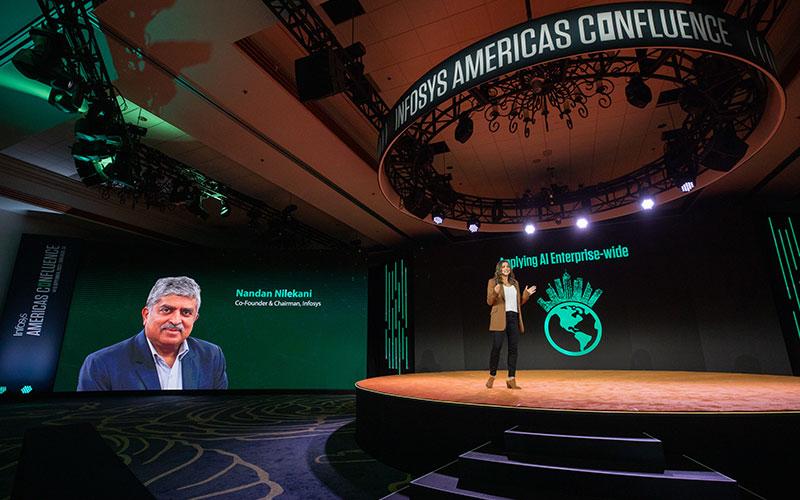
Nandan Nilekani has said that artificial intelligence (AI) will not replace companies like Infosys, but it will create a major advantage for people and organizations that successfully adapt to the new technology era.
Speaking about the future of technology and the IT industry, Nilekani highlighted that AI should be viewed as a productivity tool rather than a threat to jobs and businesses.
AI as a Growth Opportunity, Not a Replacement
According to Nilekani, AI is changing how businesses operate, but the technology will mainly enhance human capabilities instead of completely replacing professionals.
He explained that the companies and employees who learn to work with AI tools will become more productive and competitive.
Key message:
AI will improve efficiency
Human expertise will remain important
Adaptability will decide future success
How AI Could Transform IT Services
The IT services industry, including companies like Infosys, is experiencing rapid changes due to generative AI.
AI can help technology companies with:
Faster software development
Automated testing
Data analysis
Customer service solutions
Business process automation
Improved decision-making
Instead of eliminating the role of engineers, AI can help them complete complex tasks faster.
Infosys and AI Strategy
Infosys has been investing heavily in artificial intelligence, automation, and digital transformation.
The company has been developing AI-based solutions to help businesses improve operations and adopt new technologies.
Areas where AI is being used include:
Enterprise automation
Cloud services
Software development
Analytics
AI consulting
The goal is to help clients use AI effectively while creating new business opportunities.
“Those Who Adapt Will Benefit”
Nilekani emphasized that the biggest impact of AI will be on individuals and companies that are willing to learn and change.
Professionals who develop AI-related skills can benefit through:
Higher productivity
New career opportunities
Better problem-solving abilities
Faster innovation
He suggested that the future workforce will not be divided between humans and AI, but between people who know how to use AI and those who do not.
AI and the Future of Jobs
The rise of AI has created concerns about job security, especially in technology sectors.
However, Nilekani believes technology shifts have historically created new opportunities. Just as earlier waves of computing and the internet changed industries, AI is expected to create new roles.
Future jobs may focus more on:
AI management
Creativity
Strategy
Human decision-making
Technology collaboration

Actress with back-to-back Telugu flops may leave Hyderabad