
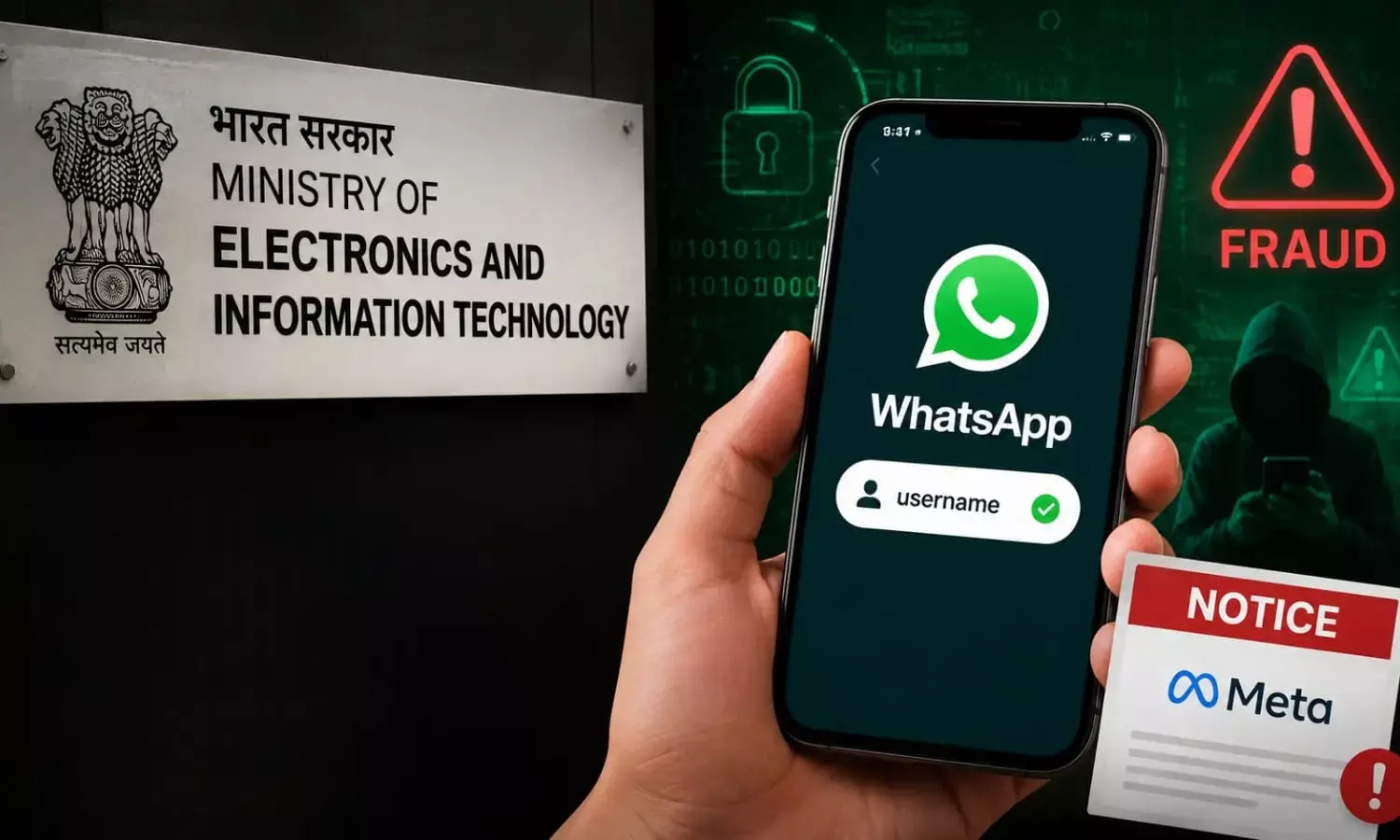
The Indian government has directed Meta-owned WhatsApp to temporarily halt the rollout of its upcoming username feature in the country, citing concerns that it could increase the risk of online fraud, phishing, impersonation, and cybercrime. The Ministry of Electronics and Information Technology (MeitY) has also issued a formal notice asking the company to explain how the feature will operate and what safeguards are in place before it can be launched in India.
The proposed feature would allow WhatsApp users to communicate using unique usernames instead of sharing their mobile phone numbers. While the update is designed to improve user privacy by hiding phone numbers from strangers, Indian authorities fear that the added anonymity could make it easier for cybercriminals to impersonate trusted individuals, government agencies, banks, or businesses and deceive unsuspecting users.
According to the government notice, Meta has been instructed not to roll out the username feature in India until consultations are completed. Officials have also given WhatsApp three days to submit a detailed explanation describing how usernames will be assigned, what verification measures will be used, and how the platform intends to prevent misuse. Authorities warned that failure to comply with India’s due diligence requirements under the Information Technology Act could invite regulatory action.
Government officials
believe the feature could significantly increase the risk of phishing attacks, digital arrest scams, identity theft, and impersonation, particularly if fraudsters create usernames resembling those of public figures, financial institutions, or government departments. They argue that concealing phone numbers may make it more difficult for victims and law enforcement agencies to identify the people behind fraudulent accounts.
WhatsApp has defended the proposed update, stating that the feature has been designed with multiple layers of security. The company clarified that users will still need a valid phone number to create a WhatsApp account, and usernames will be optional, not publicly searchable, and protected by anti-abuse systems. It also said users will only be able to contact someone if they know the exact username, reducing the possibility of random spam messages.
Meta further explained that it has introduced several safeguards to reduce misuse. These include reserving usernames belonging to well-known individuals and organizations, limiting how many new users an account can contact within a certain period, detecting repeated attempts to guess usernames, and using automated systems to identify suspicious behaviour. The company maintains that these measures are intended to prevent impersonation and large-scale scam campaigns.
The government’s intervention
comes at a time when India has intensified its efforts to combat cyber fraud. Officials have repeatedly expressed concern over the growing number of online scams involving fake police officers, bank representatives, customer care executives, and government officials. Regulators believe messaging platforms must ensure that new privacy features do not unintentionally create opportunities for criminals to exploit users.
Digital rights advocates, however, have questioned the legal basis for requiring prior government approval before a feature is launched. They argue that enhancing privacy through usernames can benefit users by reducing unnecessary exposure of personal phone numbers, provided strong security measures are implemented. The debate has highlighted the ongoing challenge of balancing user privacy with public safety and regulatory oversight.
India remains WhatsApp’s largest global market, with more than 500 million users, making the outcome of these discussions particularly significant for both Meta and Indian regulators. Until the government completes its review, the username feature will remain on hold in the country, while consultations continue over the privacy, security, and fraud-prevention measures required before any public rollout.
Hyderabad: Brain-dead businesswoman’s family donates her organs