
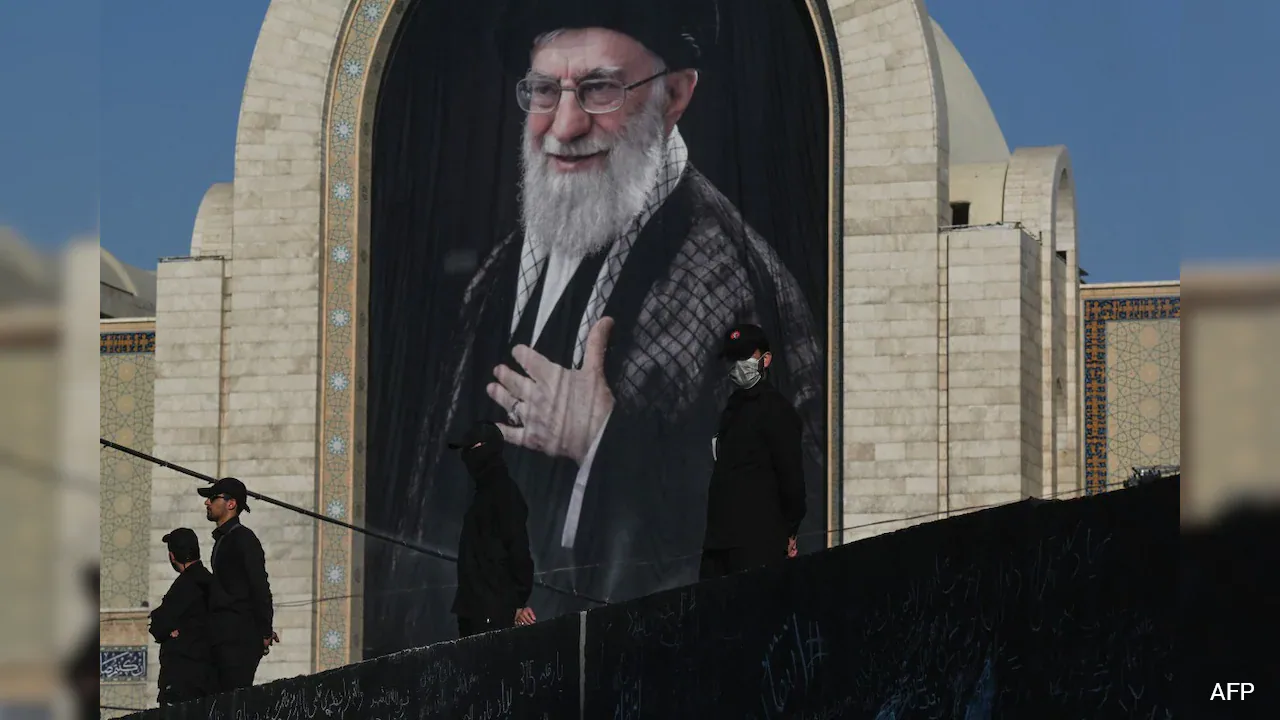
Mashhad, Iran: Iran held the burial of its late Supreme Leader, Ayatollah Ali Khamenei, in his hometown of Mashhad on Thursday, July 9, bringing an end to several days of large funeral ceremonies and public mourning. The burial took place at the Imam Reza Shrine, one of the most important religious sites for Shia Muslims.
Khamenei was killed on February 28 during the opening phase of the US-Israeli military campaign against Iran. His death marked a major turning point for the Islamic Republic, as he had served as the country’s highest political and religious authority for nearly four decades.
Large Crowds Attend Funeral Processions
Before the final burial in Mashhad, Khamenei’s coffin was carried through several important religious and political centres. Large gatherings were held in Tehran, Qom and the Iraqi holy city of Najaf, where mourners participated in funeral prayers and processions.
Supporters carried Iranian flags and portraits of the late leader, while many chanted slogans against the United States and Israel. The ceremonies became both a period of national mourning and a public display of support for Iran’s political establishment.
The burial in Mashhad held special significance because the northeastern city was Khamenei’s birthplace. The Imam Reza Shrine attracts millions of pilgrims every year and is regarded as Iran’s most important Shia religious complex.
Funeral Takes Place During Renewed Conflict
The burial occurred amid a fresh escalation between Iran and the United States. New American strikes reportedly targeted Iranian military and strategic sites after tensions increased around commercial shipping and the Strait of Hormuz.
Iran responded with missile and drone attacks against US-linked military facilities in parts of the Gulf. Iranian officials warned that further attacks could lead to additional retaliation, raising concerns that the renewed fighting could weaken earlier ceasefire efforts.
The Strait of Hormuz remains a major concern because a significant share of the world’s oil supply passes through the strategic waterway. Any prolonged disruption could affect global energy supplies, shipping costs and oil prices.
Khamenei’s Long Rule Comes to an End
Ali Khamenei became Iran’s Supreme Leader in 1989 and remained the country’s most powerful authority for approximately 37 years. During his leadership, he exercised major influence over national security, foreign policy, the armed forces and Iran’s nuclear programme.
His supporters viewed him as a leader who defended Iran’s independence and resisted pressure from Western countries. Critics, however, associated his rule with restrictions on political opposition, limits on civil freedoms and the increasing influence of the Islamic Revolutionary Guard Corps.
Khamenei’s death created one of Iran’s most important leadership transitions since the establishment of the Islamic Republic. His son, Mojtaba Khamenei, was selected as his successor, although reports indicated that he had remained away from major public appearances while recovering from injuries.
A Significant Moment for Iran
The final burial marked the conclusion of an extended period of mourning, but Iran continues to face major political, military and economic challenges. Renewed conflict with the United States, tensions involving Israel, economic pressure and uncertainty over regional security are expected to influence the country’s future direction.
The funeral also demonstrated the deep political divisions surrounding Khamenei’s legacy. While large numbers of supporters mourned his death, other Iranians remained critical of the governmnse, nucleent’s policies and its handling of economic and social issues.
As Iran moves forward under new leadership, international attention is expected to remain focused on its military respoar policy, relations with Western countries and approach to the continuing regional conflict.

Hyderabad: Brain-dead businesswoman’s family donates her organs