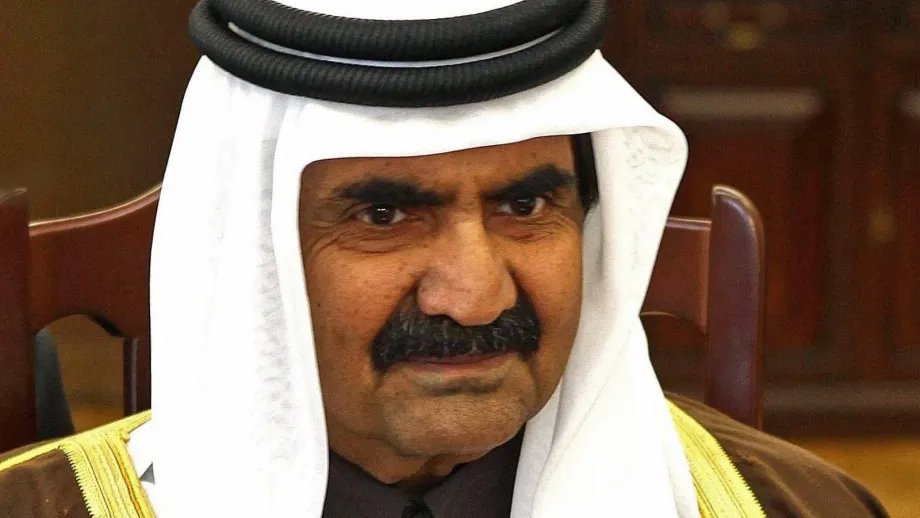
Former Emir of Qatar Sheikh Hamad bin Khalifa Al Thani, widely regarded as the leader who transformed Qatar into a wealthy and influential global power, died on Sunday, July 12, 2026, at the age of 74.
The announcement was made by Qatar’s Amiri Diwan, the country’s highest government authority. Sheikh Hamad, who was officially known as the “Father Amir” after stepping down from power, played a major role in shaping modern Qatar and strengthening the country’s position in global politics, energy, media, investment and diplomacy.
The cause of his death was not immediately disclosed.
Qatar Announces Four Days of Mourning
Following the announcement, Qatar declared four days of official public mourning. Government ministries, public institutions and other state bodies suspended work, while national flags were ordered to be lowered to half-mast.
The Amiri Diwan expressed deep sorrow over the death of the former ruler and described his passing as a major loss for Qatar. Condolences began arriving from political leaders, royal families and governments across the world.
Sheikh Hamad was the father of Qatar’s current Emir, Sheikh Tamim bin Hamad Al Thani, who has ruled the country since 2013.
Early Life and Rise to Leadership
Sheikh Hamad bin Khalifa Al Thani was born in Doha on January 1, 1952. He belonged to Qatar’s ruling Al Thani family and received military education before taking on important responsibilities in the country’s government.
He became Qatar’s Emir on June 27, 1995, after taking power from his father, Sheikh Khalifa bin Hamad Al Thani, in a bloodless palace coup. At the time, Qatar was a relatively small Gulf state with major natural-gas reserves but limited international influence.
During his 18-year rule, Sheikh Hamad introduced major economic and political changes. His leadership period became closely associated with Qatar’s rapid development and growing global importance.
Expansion of Qatar’s Natural-Gas Industry
One of Sheikh Hamad’s most important achievements was the development of Qatar’s vast natural-gas resources.
Under his leadership, Qatar invested heavily in liquefied natural gas, commonly known as LNG. The country expanded production facilities and built international energy partnerships, helping it become one of the world’s leading LNG exporters.
Revenue from the energy industry contributed to rapid economic growth and funded major developments in healthcare, education, infrastructure and public services.
Qatar’s growing wealth also allowed the country to increase its investments overseas and acquire important assets in Europe, the United States and other parts of the world.
Qatar Becomes an International Diplomatic Power
During Sheikh Hamad’s leadership, Qatar adopted an active foreign policy despite its small geographical size.
The country developed strong relations with Western nations while also maintaining communication with governments and political groups across the Middle East. Qatar became involved in diplomatic negotiations and mediation efforts related to several regional conflicts.
The country also strengthened its security relationship with the United States and hosted a major American military presence.
Sheikh Hamad’s foreign-policy approach helped establish Qatar as an important diplomatic centre capable of maintaining relations with different and sometimes opposing political powers.
Education and Social Development
Education and social development expanded significantly during Sheikh Hamad’s rule.
Working alongside his wife, Sheikha Moza bint Nasser, he supported major investments in schools, universities, scientific research and cultural institutions.
Education City in Doha became one of Qatar’s most important educational projects. The development attracted branches of several international universities and encouraged research and innovation.
Qatar also expanded its healthcare system, cultural programmes and opportunities for young people during this period.
Qatar Wins the Right to Host the FIFA World Cup
Another major milestone during Sheikh Hamad’s rule was Qatar’s successful bid to host the 2022 FIFA World Cup.
In 2010, Qatar was selected as the first Arab and Middle Eastern country to host the tournament. The decision significantly increased the country’s international profile and led to major investments in stadiums, transport systems and urban infrastructure.
Although the tournament took place almost a decade after Sheikh Hamad stepped down, Qatar’s successful bid was considered an important achievement of his leadership period.
Abdication in Favour of His Son
On June 25, 2013, Sheikh Hamad voluntarily transferred power to his son, Sheikh Tamim bin Hamad Al Thani.
The peaceful transfer was considered unusual in a region where hereditary rulers often remain in office for life. Sheikh Hamad said the time had come for a younger generation to take responsibility for the country’s future.
After stepping down, he became known as the Father Amir and continued to hold an important symbolic position in Qatar.
A Legacy That Transformed Qatar
Sheikh Hamad’s leadership changed Qatar from a relatively little-known Gulf country into one of the wealthiest and most influential states in the world.
His supporters credit him with developing the natural-gas industry, modernising infrastructure, expanding education, establishing Qatar as a diplomatic mediator and increasing the country’s influence through international media, investment and sport.
His foreign-policy decisions also attracted criticism and controversy, particularly Qatar’s relations with various political groups during periods of regional conflict and unrest.
Despite differing views on some of his policies, Sheikh Hamad is widely recognised as one of the most influential leaders in Qatar’s modern history.
His death marks the end of an important era for the Gulf nation. The institutions, economic developments and international relationships established during his rule continue to influence Qatar’s position in the world today.

Actress with back-to-back Telugu flops may leave Hyderabad