
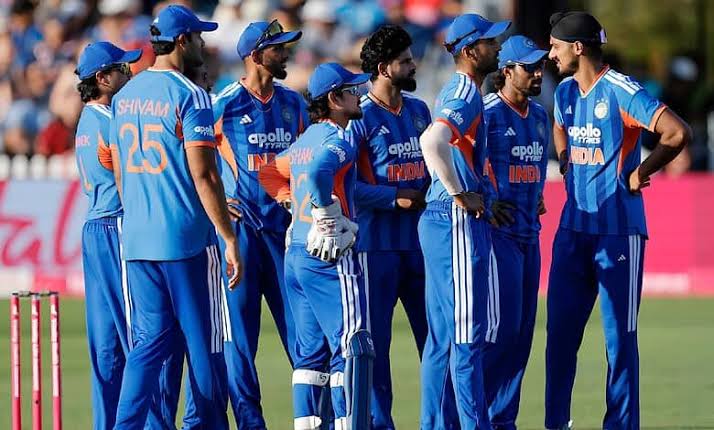
India’s disappointing cricket tours of Ireland and England have raised serious concerns about the team’s performance, preparation, and ability to adapt to challenging overseas conditions. After suffering a 2–0 T20I series whitewash against Ireland, India endured another difficult campaign in England, losing the five-match T20I series 4–0, with one match producing no result.
These defeats were not merely the result of a few poor performances. They exposed deeper weaknesses in India’s batting approach, team selection, leadership, fielding standards, and ability to respond effectively when conditions were unfamiliar.
Batting Failures Become India’s Biggest Concern
India entered the overseas contests with a reputation for aggressive and fearless T20 batting. However, the batting unit struggled to reproduce the dominant performances seen in previous tournaments and bilateral series.
Against both Ireland and England, Indian batters frequently failed to build meaningful partnerships. Early wickets placed pressure on the middle order, while several batters struggled to decide whether to attack or rebuild the innings.
The aggressive approach that had previously made India dangerous appeared less effective on pitches offering extra bounce, movement, and variation. Instead of adjusting their techniques according to the conditions, some batters continued playing high-risk shots. This resulted in repeated collapses and left the lower order with too much responsibility.
India’s batting was expected to be the team’s greatest strength. However, when the strongest department failed consistently, the pressure also affected the bowlers and fielders.
Inability to Adapt to Overseas Conditions
One of the clearest weaknesses exposed during the tours was India’s inability to adjust quickly to changing conditions.
The pitches and weather conditions in Ireland and England were different from the generally batting-friendly surfaces experienced during the Indian Premier League. The ball often moved in the air, bounced more sharply, and demanded greater patience and technical discipline from the batters.
Indian players appeared uncomfortable against disciplined bowling that targeted hard lengths and used changes of pace effectively. England also used the dimensions of different grounds intelligently, while India struggled to modify their plans from one venue to another.
Captain Shreyas Iyer acknowledged that the team faced difficulties adapting to different grounds, conditions, and challenges throughout the tour. India’s inability to make quick tactical adjustments became increasingly visible as the losses continued.
Middle-Order Instability
The middle order emerged as one of India’s most significant concerns.
During the series against Ireland, India struggled particularly during the middle overs. The batters were often able to survive but failed to maintain a strong scoring rate. As a result, pressure increased before the final overs.
India lacked a batter who could control the innings while also attacking the opposition between overs seven and fifteen. Too many quiet overs allowed Ireland’s bowlers to dominate and forced Indian batters to take greater risks later in the innings.
The middle order appeared uncertain and lacked confidence. Players struggled to rotate the strike regularly, find boundaries, and change the momentum of matches.
A successful T20 middle order requires a balance between stability and aggression. India frequently had players capable of performing one of these roles, but few were able to combine both qualities consistently.
England Defeated India with Their Own Aggressive Style
One of the most concerning aspects of the England series was the manner in which the hosts dominated India.
England adopted an aggressive batting approach similar to the fearless style India had successfully used in previous tournaments. England’s batters attacked with confidence, placed pressure on the bowlers, and maintained a high scoring rate.
India, meanwhile, appeared hesitant and defensive during important moments.
The situation demonstrated that aggressive cricket alone is not enough. Successful teams must combine attacking intent with intelligent decision-making, technical ability, and adaptability.
England executed its plans more effectively and appeared better prepared for different match situations. India struggled to respond when the opposition took control.
Poor Team Selection and Unclear Player Roles
Questions were also raised regarding India’s team selection.
The squad contained several talented players, all-rounders, and flexible batting options. However, the roles of some players appeared unclear. Frequent changes in the batting order made it difficult for players to settle into specific positions.
A successful T20 team requires clearly defined responsibilities. Opening batters must understand how aggressively they are expected to play, middle-order players must know when to rebuild or accelerate, and finishers must be prepared to score quickly under pressure.
India appeared to have several players capable of performing multiple roles but lacked specialists for certain match situations.
The absence of clearly defined responsibilities may have contributed to uncertainty during difficult periods.
Bowling Under Pressure
India’s bowlers also struggled to maintain consistency.
When the batting unit failed to produce competitive totals, the bowlers were forced to defend low scores. This reduced their margin for error and placed additional pressure on every over.
At times, the bowling attack lacked control and failed to execute plans consistently. England’s aggressive batters took advantage of loose deliveries and forced India’s bowlers to change their strategies.
The team also struggled to control the game when partnerships developed. India often lacked an effective alternative plan when the original bowling strategy failed.
However, the bowling problems cannot be viewed separately from the batting failures. Larger totals would have provided the bowlers with greater freedom to attack and experiment.
Fielding Standards Decline
India’s fielding performance added to the team’s difficulties.
Dropped catches, missed opportunities, and inconsistent ground fielding allowed opponents to gain additional runs and maintain momentum. In international cricket, especially in the T20 format, a single missed opportunity can significantly influence the result.
Strong fielding can compensate for weaknesses in other departments. However, poor fielding increases pressure on both bowlers and captains.
India appeared to lose confidence as the defeats continued, and this decline was reflected in the team’s body language and fielding intensity.
Questions About Leadership and Tactical Decisions
The difficult overseas campaign also placed captain Shreyas Iyer’s leadership under examination.
Leading a team during a period of transition is challenging, particularly when several players are competing for permanent positions. However, some tactical decisions appeared reactive rather than proactive.Questions were raised about changes in the batting order, bowling combinations, field placements, and the team’s response during crucial moments.
Leadership in T20 cricket requires quick decisions and the ability to predict how a match may develop. India occasionally appeared to wait for situations to worsen before making tactical changes.
However, responsibility cannot be placed entirely on the captain. Coaches, selectors, senior players, and team management also play important roles in preparing strategies and defining player responsibilities.
Impact of the IPL Playing Style
The performances also created a debate regarding whether extended exposure to IPL conditions affected India’s preparation.
Many Indian players entered international cricket after competing on relatively familiar domestic pitches. Overseas conditions required different techniques and greater adaptability.
Success in franchise cricket does not automatically guarantee success at the international level. International teams study players carefully and develop specific strategies to target their weaknesses.
The Ireland and England tours demonstrated that players must be prepared to adjust their techniques instead of depending entirely on the aggressive methods that work in familiar conditions.
What India Must Improve
India possesses a large pool of talented players, and the defeats do not mean that the team lacks quality. However, several improvements are necessary.
The team must develop greater technical flexibility against swing and extra bounce. Middle-order roles should be clearly defined, while selectors must identify players capable of controlling and accelerating during the middle overs.
India must also improve its fielding standards and develop stronger alternative strategies when the original match plan fails.
Most importantly, the team needs consistency. Frequent changes in personnel and batting positions may prevent players from developing confidence and understanding their responsibilities.
A Necessary Wake-Up Call
Although the defeats were painful, they may provide India with an opportunity to identify and correct weaknesses before future major tournaments.
Winning regularly can sometimes hide underlying problems. Heavy defeats force teams to examine their preparation, selection policies, tactics, and overall approach.
The losses against Ireland and England revealed that talent alone is not enough to guarantee success. Adaptability, discipline, confidence, tactical awareness, and effective execution are equally important.
India now faces an important period of evaluation. The response from the players, selectors, coaches, and team management will determine whether these defeats become the beginning of a longer decline or an important turning point.
The overseas setbacks exposed serious cracks, but they also provided India with a clear understanding of the areas requiring improvement. If the team accepts these lessons and makes the necessary changes, the difficult tours could eventually contribute to the development of a stronger and more adaptable Indian side.

Actress with back-to-back Telugu flops may leave Hyderabad