
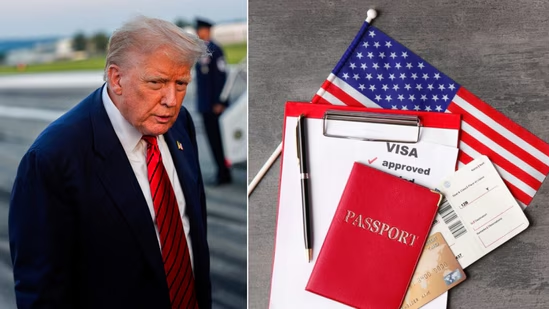
The Trump administration has announced a major proposal to change the way international student visas are issued in the United States. Under the new rule, most F (student), J (exchange visitor), and I (foreign media) visa holders would no longer be allowed to stay in the U.S. for the entire duration of their studies or work without a fixed end date. Instead, visas would be issued for a maximum period of four years, after which eligible individuals would need to apply for an extension if they wish to continue their education or training.
What Is Changing?
Currently, most international students are admitted under a system known as “Duration of Status” (D/S). This allows students to remain in the United States as long as they maintain their student status and continue their academic program.
The proposed rule would replace this long-standing policy with a fixed period of stay, generally capped at four years. Students enrolled in longer academic programs, such as doctoral (Ph.D.) degrees or certain research courses, would have to request an extension before their visa expires.
Key Changes Under the Proposal
The proposed regulations include several significant changes:
Student and exchange visitor visas would generally be limited to four years.
Students in programs lasting longer than four years would need to apply for visa extensions.
The grace period after completing studies would be reduced from 60 days to 30 days.
Students would face stricter rules for changing schools or academic programs without government approval.
Foreign journalist (I) visas would also receive fixed validity periods, generally limited to 240 days.
Why Is the Trump Administration Introducing This Rule?
The Department of Homeland Security (DHS) says the proposal is intended to improve oversight of foreign nationals and prevent misuse of visa programs. According to the administration, some visa holders remain in the United States for many years under the current “Duration of Status” system, making immigration monitoring more difficult.
Officials argue that introducing fixed visa periods will improve national security, strengthen immigration enforcement, and ensure better tracking of international students and exchange visitors.
Impact on International Students
If implemented, the policy could significantly affect international students studying in the United States.
Students enrolled in long-term programs, especially doctoral research and professional degrees, may face additional paperwork, visa extension applications, and uncertainty during their studies. Those participating in Optional Practical Training (OPT) after graduation could also require extensions because the new fixed visa period may expire before their training is complete.
Concerns Raised by Universities
Higher education organizations and immigration experts have expressed concern over the proposal.
Critics argue that:
The United States could become less attractive to international students.
Universities may experience declining international enrollment.
Students may face interruptions if visa extensions are delayed or denied.
Research institutions could lose talented students and researchers to countries with more flexible immigration policies.
Impact on Indian Students
India is one of the largest sources of international students in the United States. Thousands of Indian students pursue undergraduate, postgraduate, and doctoral education at American universities every year.
If the proposed rule takes effect, many Indian students—particularly those enrolled in engineering, medical, and Ph.D. programs lasting more than four years—could need to apply for extensions before completing their education. This may increase administrative costs and create additional uncertainty regarding their academic and career plans

Actress with back-to-back Telugu flops may leave Hyderabad