
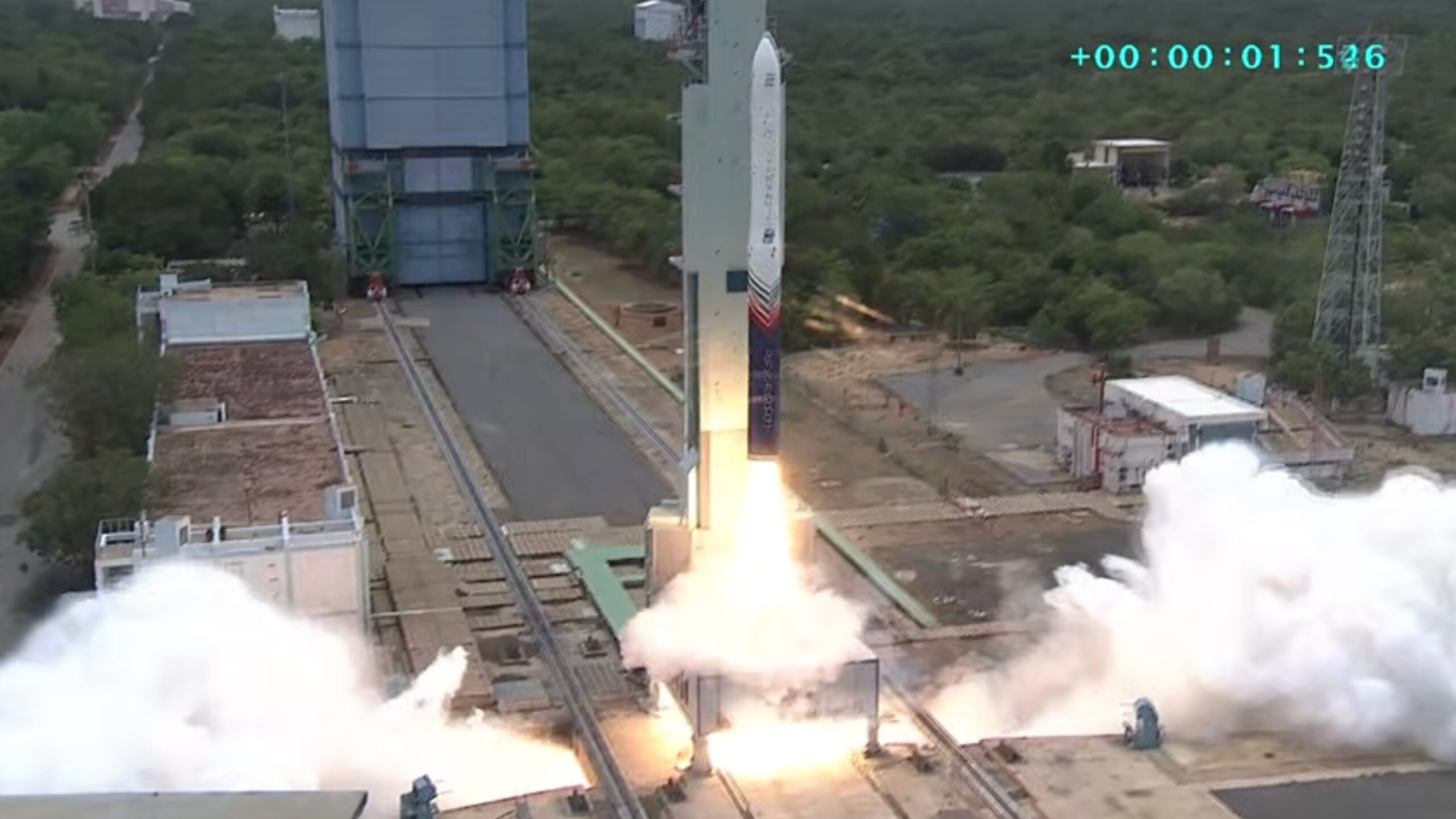
Hyderabad-based Skyroot Aerospace has created history by successfully launching Vikram-1, India’s first privately developed orbital rocket, into space. The landmark mission, called Mission Aagaman, lifted off from the Satish Dhawan Space Centre in Sriharikota on July 18, 2026, marking a major breakthrough for India’s private space industry. The successful launch demonstrates that Indian private companies are now capable of building and launching orbital-class rockets, opening a new chapter in the country’s space journey.
A Historic Achievement for India
The Vikram-1 mission is considered one of the most significant milestones in India’s space history since the country’s space sector was opened to private companies in 2020. Until now, orbital launches from India had been carried out only by the Indian Space Research Organisation (ISRO). With Vikram-1 reaching orbit successfully, Skyroot Aerospace became the first Indian private company to place payloads into orbit, placing India among the few nations with proven private orbital launch capability.
About Skyroot Aerospace
Skyroot Aerospace is a Hyderabad-based space technology startup founded in 2018 by former ISRO scientists Pawan Kumar Chandana and Naga Bharath Daka. The company aims to provide affordable, reliable, and rapid launch services for small satellites worldwide. Since its inception, Skyroot has focused on developing innovative launch vehicles using advanced manufacturing technologies, including lightweight composite materials and 3D-printed rocket engines.
The Vikram-1 Rocket
Vikram-1 is a three-stage orbital launch vehicle named after Dr. Vikram Sarabhai, the father of India’s space programme. The rocket stands approximately 22 metres tall and is designed to carry small satellites into Low Earth Orbit (LEO). It uses a combination of solid-fuel propulsion stages along with a liquid-fuel upper stage featuring a 3D-printed engine, making it one of India’s most technologically advanced privately built rockets.
Mission Aagaman
The maiden orbital flight was named Mission Aagaman, meaning “arrival.” The mission represented the arrival of India’s private space industry into the global commercial launch market. Shortly after liftoff, the rocket completed all planned stage separations, successfully ignited its upper stage, and injected multiple payloads into a 450-kilometre Low Earth Orbit around 15 minutes after launch.
Payloads Carried
Vikram-1 carried six payloads, including technology demonstration satellites from Indian and international customers. These payloads were intended to test new technologies, conduct scientific experiments, and validate commercial satellite systems in orbit. The successful deployment confirmed the rocket’s capability to support future commercial satellite missions.
Initial Delay Before Launch
The launch was originally scheduled for 11:30 a.m. IST but was temporarily placed on hold a few minutes before liftoff due to a technical issue detected during the automated countdown sequence. Engineers quickly resolved the issue, and the rocket lifted off safely after a delay of about 35 minutes, completing the mission without further problems.

Actress with back-to-back Telugu flops may leave Hyderabad