
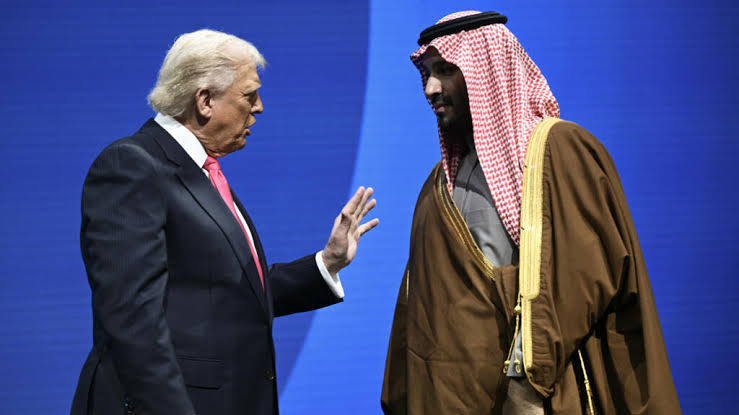
The United States and Saudi Arabia have signed a landmark civilian nuclear cooperation agreement aimed at helping the Kingdom develop a peaceful nuclear energy program. The agreement, commonly known as a “123 Agreement,” establishes the legal framework for long-term cooperation in nuclear technology and energy development.
Under the agreement,
American companies will be able to participate in building nuclear reactors, supplying technology, and supporting Saudi Arabia’s civil nuclear industry. The partnership is expected to be worth billions of dollars over several decades and is intended to strengthen economic and strategic ties between the two countries.
One of the most significant aspects of the deal is that it could allow Saudi Arabia to enrich uranium for civilian nuclear fuel under agreed safeguards. This has drawn international attention because uranium enrichment can be used for peaceful energy production but, if misused, could also contribute to nuclear weapons development. U.S. officials say the agreement contains safeguards designed to ensure the program remains peaceful.
The agreement also includes
a bilateral safeguards framework intended to promote nuclear safety, security, and non-proliferation. However, some experts and lawmakers have expressed concern that the deal does not require Saudi Arabia to adopt the International Atomic Energy Agency’s (IAEA) Additional Protocol, which allows for more extensive inspections of nuclear facilities. Critics argue that this could weaken international oversight.
Supporters of the agreement
believe it will help Saudi Arabia diversify its energy sources, reduce dependence on oil for electricity generation, and strengthen U.S. influence in the Middle East by ensuring that American companies—not competitors from countries such as China or Russia—play a leading role in the Kingdom’s nuclear sector.
The agreement must still undergo review by the U.S. Congress before it is fully implemented. While the administration has promoted it as an important strategic and economic achievement, lawmakers are expected to closely examine its security implications before giving final approval.

Hyderabad: Brain-dead businesswoman’s family donates her organs