
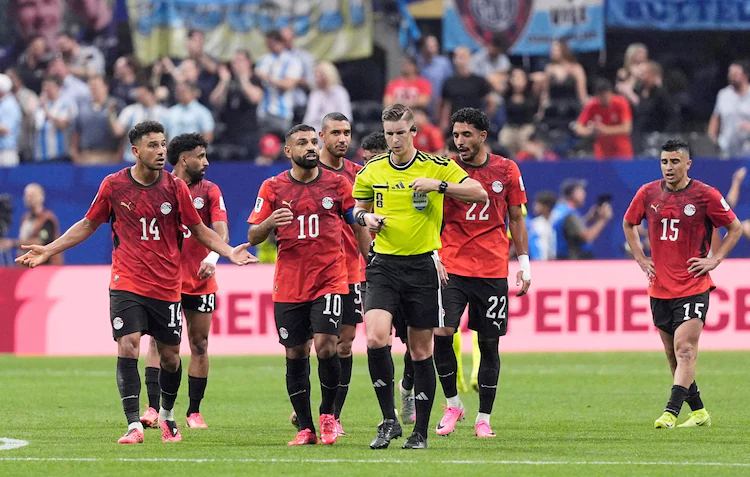
Mohamed Salah’s late penalty appeal against Argentina national football team during Egypt’s dramatic 3-2 defeat became one of the biggest talking points of the match. While many supporters initially believed Egypt had been denied a clear penalty, a newly circulated replay angle has led many analysts and former referees to conclude that the on-field decision to continue play was justified.
What happened?
The incident occurred deep into stoppage time with the score level. Salah entered Argentina’s penalty area before challenging for the ball with an Argentine defender. After contact between the players, Salah went to ground and immediately appealed for a penalty. Instead of stopping play, the referee allowed the game to continue. Argentina quickly launched a counterattack and scored the winning goal moments later, making the decision even more controversial.
Why did many fans think it was a penalty?
From the original television broadcast, the challenge appeared to show Salah being caught inside the penalty area after attempting to control the ball. Social media was flooded with slow-motion clips suggesting the defender had clipped Salah’s foot. Egypt’s players and coaching staff protested strongly, arguing that VAR should have recommended an on-field review.
What does the new camera angle show?
A wider and clearer angle paints a different picture. It indicates that:
The Argentine defender reached the ball first with a clean tackle.
The main contact occurred only after the ball had already been won.
Salah’s momentum carried him forward after losing possession rather than being clearly tripped.
The level of contact was considered normal for a football challenge and did not meet the threshold for a penalty.
Because the defender played the ball before the collision and there was no obvious foul, VAR had no reason to intervene under the “clear and obvious error” standard.
Why didn’t VAR overturn the decision?
VAR only recommends an on-field review when there is strong evidence that the referee made a clear mistake. In this case:
The referee had an unobstructed view of the challenge.
VAR reviewed the incident while play continued.
Officials concluded there was insufficient evidence of a foul.
Therefore, the original decision of “no penalty” remained in place.
Why is there still controversy?
Although many observers now agree the Salah challenge itself was not enough for a penalty, others argue that officiating lacked consistency throughout the match. Critics point to earlier VAR decisions involving Egypt, particularly a disallowed goal, claiming similar levels of contact were judged differently. This perceived inconsistency has kept the debate alive despite the new replay angle.

Hyderabad: Brain-dead businesswoman’s family donates her organs